Kushimoto Tuna Beyond the Plate: Auctions, Feeding and Canning
Overview
Kushimoto, the southernmost town on Honshu, is tuna country. It was in Wakayama that Kindai University achieved the world’s first full-cycle farming of Pacific bluefin, in 2002 — hatching fish artificially, raising them to spawning age, and taking the next generation from them. The argument of this round-up is that eating the fish is only half the pleasure: around Kushimoto and neighbouring Nachikatsuura you can also watch it auctioned, feed it and can it.
Two plates anchor the eating. At the Shionomisaki Tourist Tower, beside the cape that marks the southern end of Honshu, the restaurant’s most-ordered dish is the Kindai tuna donburi (¥1,700), which sets fatty toro, medium chutoro and lean akami side by side. In Kushimoto itself, Maruhachi Suisan is known for selling bluefin whole, under the Nanki Kushimoto Yoshida Hon-Maguro name registered with Premier Wakayama; the set meal served at Kishu Nagisa-no-Eki Minato Matsuri (¥2,200) lays the slices out like petals.
Three programmes take it further, all by reservation. A guided tour at Katsuura watches the morning auction from the upper floor of the market, then butchers a whole fresh tuna under a professional’s eye (¥9,800, 7am start, two people minimum). On Oshima, across the water from Kushimoto port, a boat runs out to the farming pens, where 20–40 kg bluefin fight over the feed you throw in (from ¥1,650). At Maguro Taiken CAN you pack steamed tuna into tins, seal them and add a label of your own design (¥2,500, cash only). All three close on different days and need booking several days ahead, so check the official channels.
What the article covers
- Kindai tuna (Kindai University’s farmed bluefin)
- Yoshida Hon-Maguro, Maruhachi Suisan
- Tuna experiences
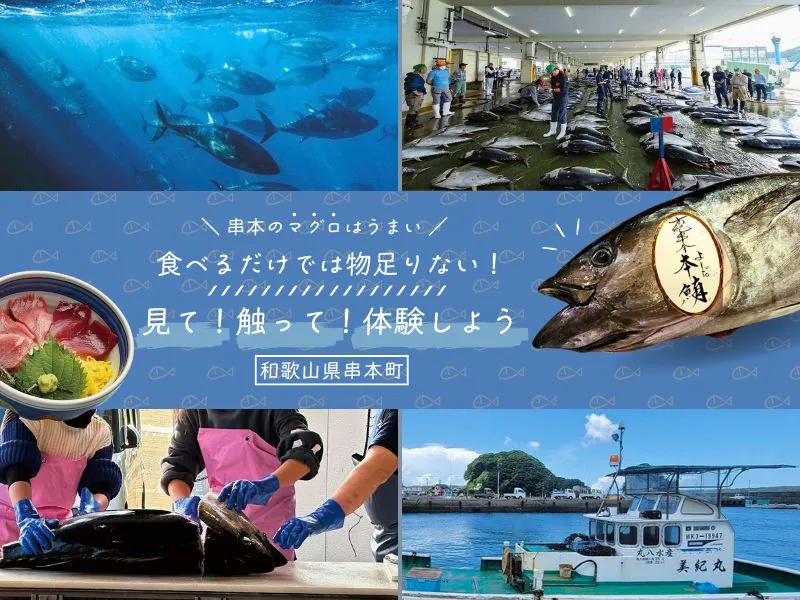 串本のマグロはうまい。食べるだけでは物足りない!見て!触って!体験しよう【和歌山県串本町】
Read the full article
Rokaru Wakayama
串本のマグロはうまい。食べるだけでは物足りない!見て!触って!体験しよう【和歌山県串本町】
Read the full article
Rokaru Wakayama
The original is in Japanese — modern browsers can translate it for you automatically.
More from this area
-
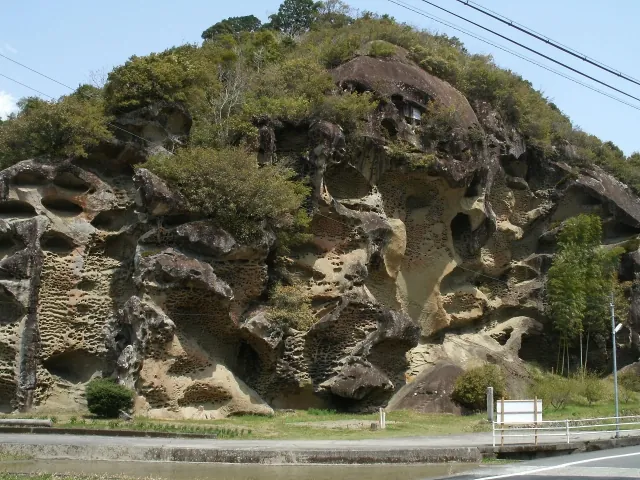 Michi-no-Eki Mushikui-iwa (Roadside Station)
Kozagawa is a town of river gorges and forest, inland from Wakayama's southern coast, and this small roadside station stands directly in front of Mushikui-iwa — a rock…
Michi-no-Eki Mushikui-iwa (Roadside Station)
Kozagawa is a town of river gorges and forest, inland from Wakayama's southern coast, and this small roadside station stands directly in front of Mushikui-iwa — a rock…
-
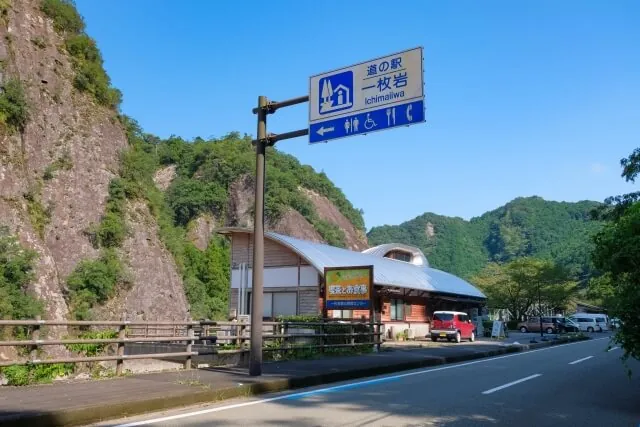 Michi-no-Eki Ichimai-iwa monolith (Roadside Station)
Kozagawa, inland from Wakayama's southern coast, is a town of outsized rocks, and Ichimai-iwa is the largest of them: a single wall of stone roughly 100 metres high and…
Michi-no-Eki Ichimai-iwa monolith (Roadside Station)
Kozagawa, inland from Wakayama's southern coast, is a town of outsized rocks, and Ichimai-iwa is the largest of them: a single wall of stone roughly 100 metres high and…
-
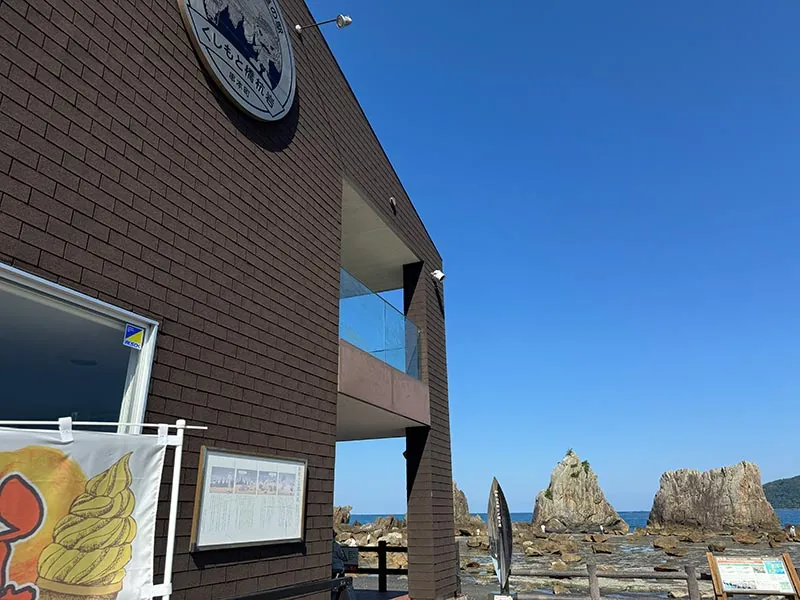 Michi-no-Eki Kushimoto Hashigui-iwa (Roadside Station)
This roadside station sits right beside the Hashigui-iwa, Kushimoto's celebrated line of sea rocks and one of the sights of Honshu's southern tip. A second-floor…
Michi-no-Eki Kushimoto Hashigui-iwa (Roadside Station)
This roadside station sits right beside the Hashigui-iwa, Kushimoto's celebrated line of sea rocks and one of the sights of Honshu's southern tip. A second-floor…