Michi-no-Eki Minabe Ume Shinkokan (Roadside Station)
Overview
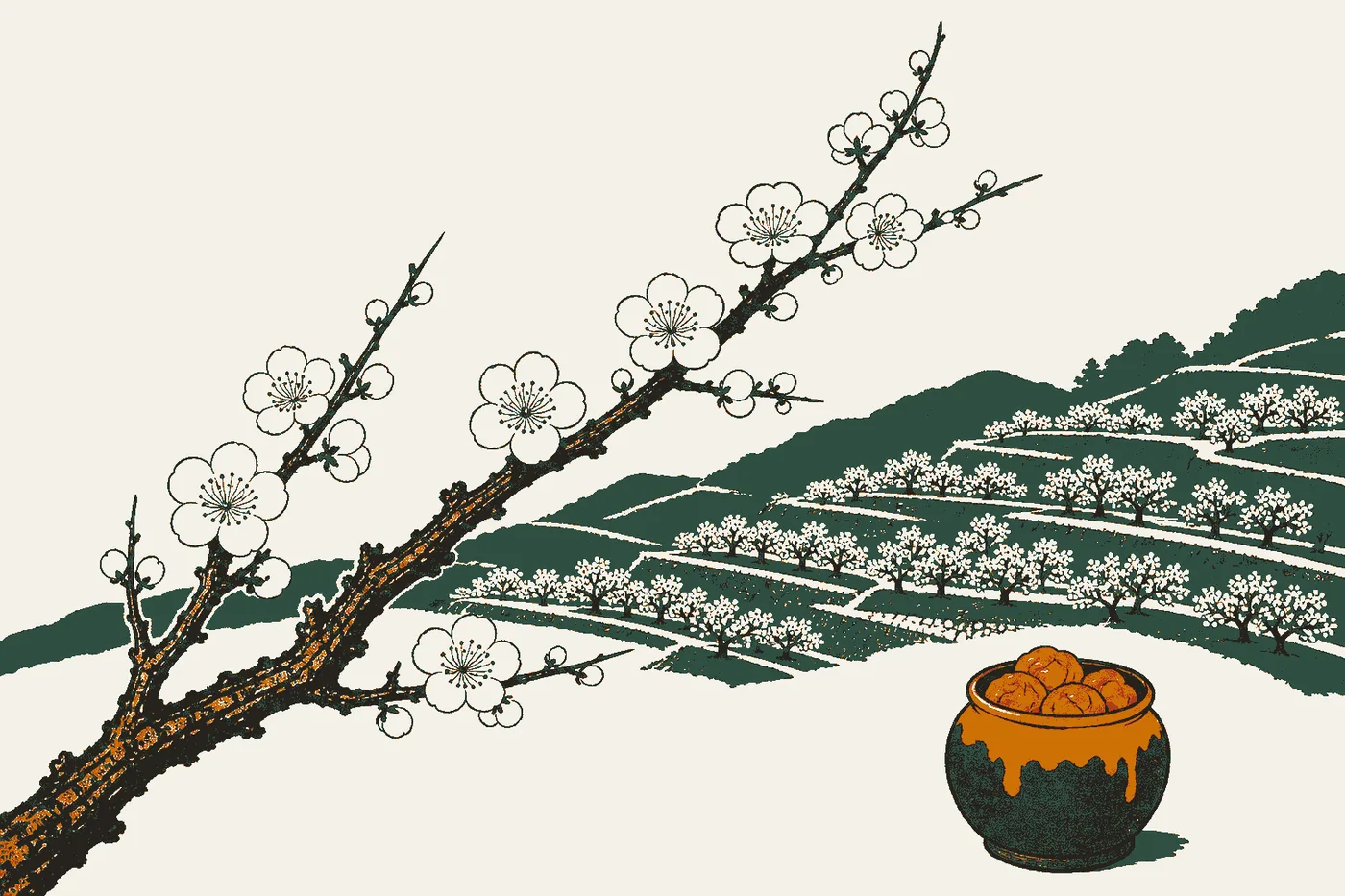
Minabe grows more plums than any other town in Japan, and this three-storey roadside station on Route 424 is where the crop is explained and sold. The orchards on the slopes around it belong to the Minabe-Tanabe Ume System, recognised by the FAO in December 2015 as a Globally Important Agricultural Heritage System: for some four hundred years farmers here have planted ume on steep, gravelly ground while keeping the surrounding coppice woodland that supplies the charcoal kilns. Entry to the exhibition floors is free.
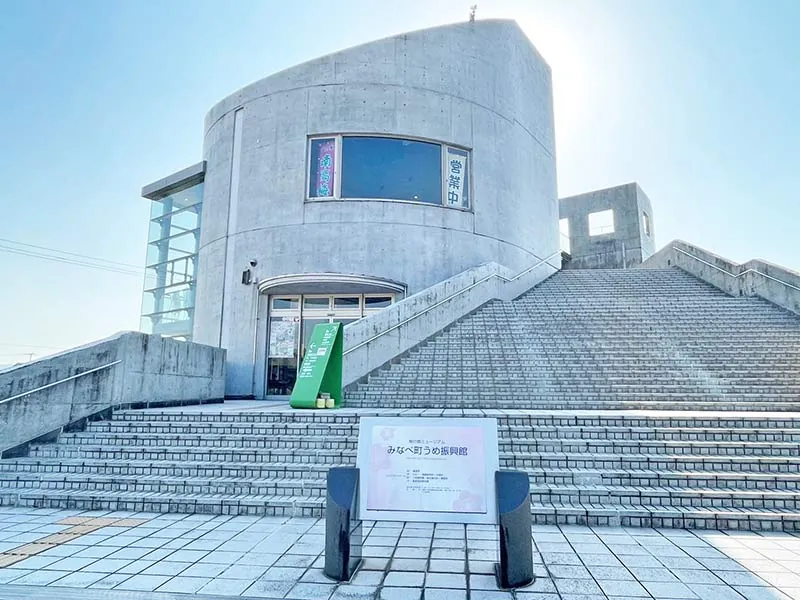
The first floor is local history — six Yayoi-period bronze bells found nearby, dioramas of a medieval hilltop castle and of packhorses carrying binchotan charcoal. The second floor belongs to the plum: a large panoramic model of the Nanbu grove in perpetual full bloom, a science theatre on what happens inside an umeboshi, fifty of the three hundred-odd flowering varieties, and pickled plums kept from about 150 years ago. The third floor is the roadside station itself, and from the top of the building the orchards run to the horizon.
The shop, Ume-no-Eki Minabegawamura, sells umeboshi made from Nanko — the plump, thin-skinned variety bred in this town — from gift boxes down to split fruit priced for home use, plus green plums for umeshu, plum jam and bishio, amazake, sweets, binchotan and seasonal vegetables. The plum soft serve is mixed with Wakayama plum purée and studded with crisp fragments of fruit, and by the third-floor entrance stands the Ume Kannon, a figure made entirely from umeboshi stones. Open 9am to 5pm, last entry to the exhibition rooms 4.30pm, closed Tuesdays but open daily through February; about two minutes from the Minabe interchange, with the Nanbu plum grove, open late January to early March, five minutes further on.
What the article covers
- Plum products of every kind at Michi-no-Eki Minabe Ume Shinkokan
- The Ume Kannon
 道の駅 みなべうめ振興館
Read the full article
Wakayama Kanko
道の駅 みなべうめ振興館
Read the full article
Wakayama Kanko
The original is in Japanese — modern browsers can translate it for you automatically.
More from this area
-
 Michi-no-Eki Ryujin (Roadside Station)
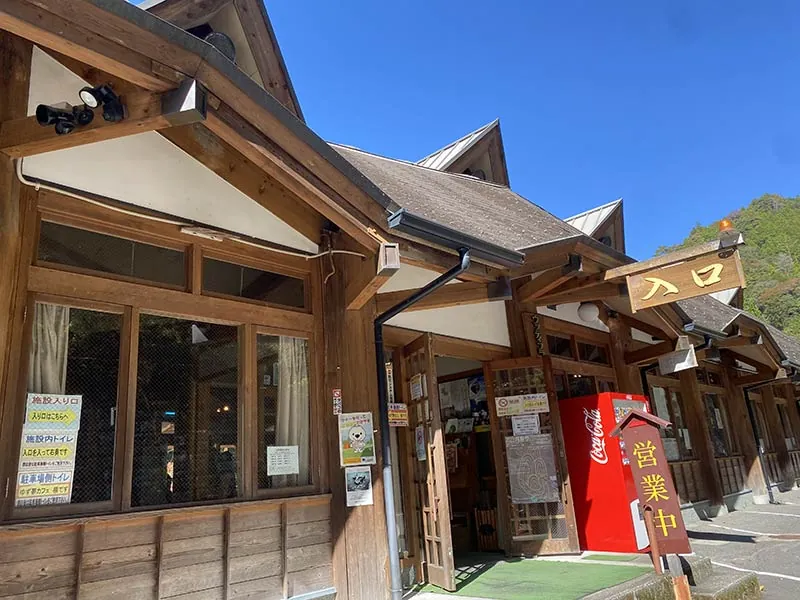
Michi-no-Eki Ryujin sits on Route 371 in Ryujin-mura, a forested village high in the mountains of Tanabe. It is run by the local forestry cooperative, and the place…
Michi-no-Eki Ryujin (Roadside Station)
Michi-no-Eki Ryujin sits on Route 371 in Ryujin-mura, a forested village high in the mountains of Tanabe. It is run by the local forestry cooperative, and the place…
-
 Kaisen Senbei Nanki: Seafood Rice Crackers near Shirahama
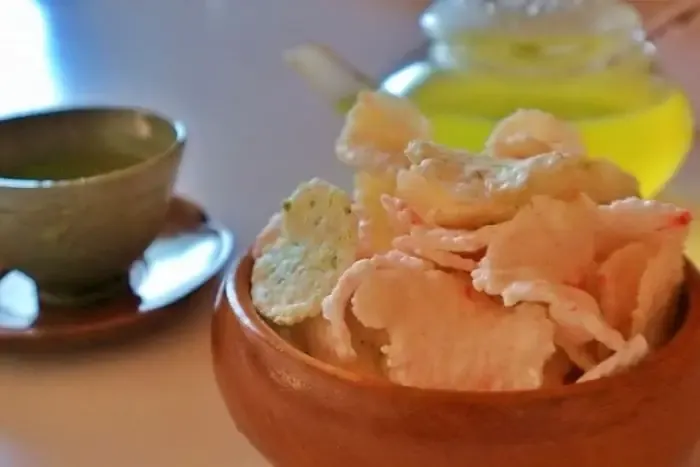
On the coast road between Tanabe and the hot-spring resort of Shirahama, Kaisen Senbei Nanki is the kind of souvenir stop that fills its car park at weekends. Open since…
Kaisen Senbei Nanki: Seafood Rice Crackers near Shirahama
On the coast road between Tanabe and the hot-spring resort of Shirahama, Kaisen Senbei Nanki is the kind of souvenir stop that fills its car park at weekends. Open since…
-
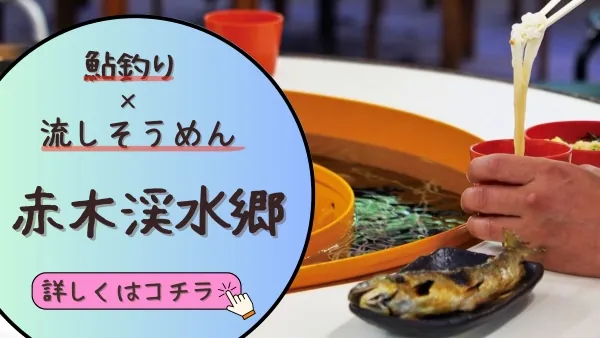 Akagidani Suigo: Flowing Somen and Ayu Fishing in Tanabe
Akagidani Suigo (read 'Akagidani Suigo') is a beloved nagashi-somen restaurant in the Ayukawa district of Tanabe, about 30 minutes inland from the Nanki-Shirahama hot…
Akagidani Suigo: Flowing Somen and Ayu Fishing in Tanabe
Akagidani Suigo (read 'Akagidani Suigo') is a beloved nagashi-somen restaurant in the Ayukawa district of Tanabe, about 30 minutes inland from the Nanki-Shirahama hot…