Wakayama Castle's Stone Walls: Three Lords, Three Kinds of Masonry
Overview
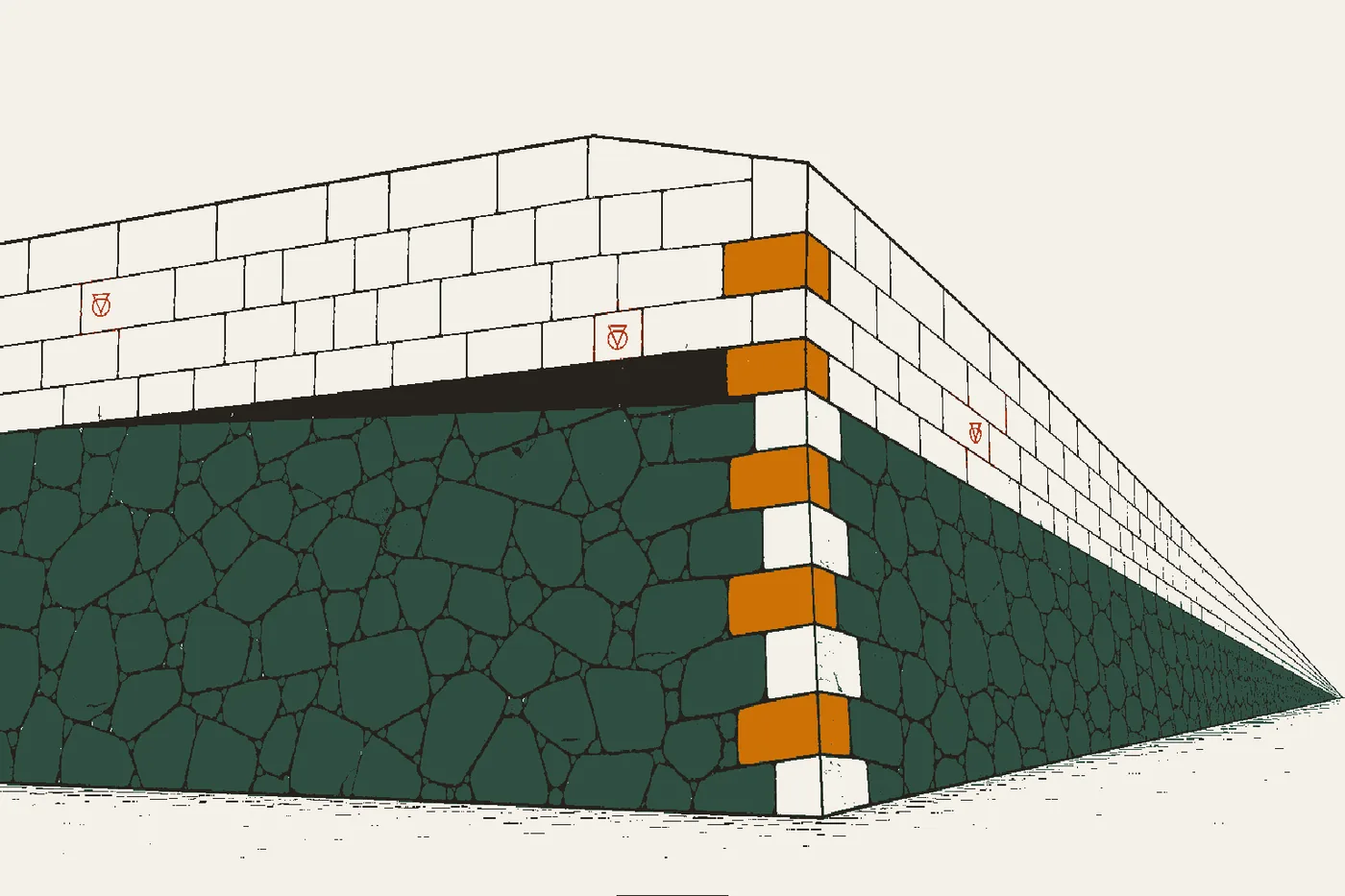
Most visitors photograph the white keep and walk straight past the better story. Wakayama Castle changed hands three times in its first forty years, and each set of lords built in a different stone by a different method — all of it still standing side by side on one hill. Under Toyotomi Hidenaga and the Kuwayama (1585-1600) the walls are crystalline schist, the blue-green aoishi of the local hills, stacked much as it was quarried. Under Asano Yoshinaga (1600-1619) they are Izumi sandstone, faces and corners knocked flat so the blocks bed tightly. From 1619 the Tokugawa added granite porphyry from Kumano, cut so exactly that the joints close altogether.
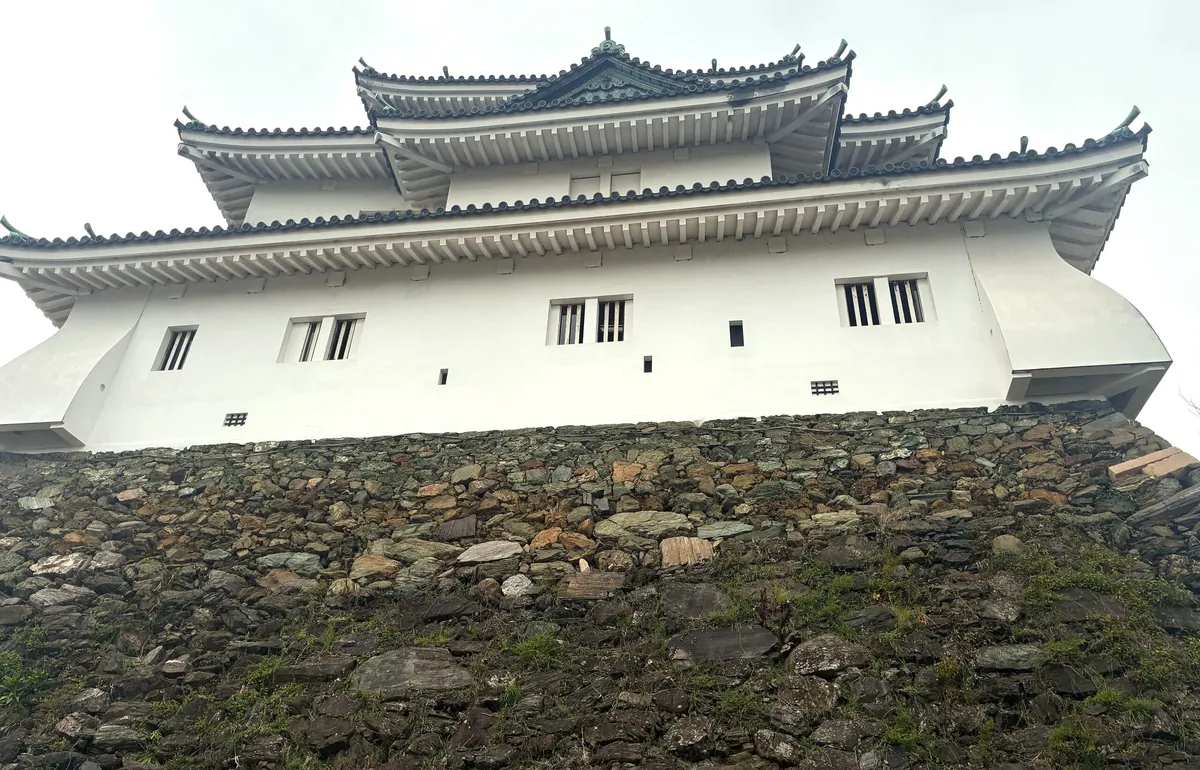
The base of the keep is thought to be among the oldest masonry on the hill, and among its rough schist are stones recycled from old pagodas and Buddhist figures. Below the Shin-Urazaka slope, an Asano-era wall carries some 790 masons' marks on that stretch alone — circles, triangles, shapes like a bird's feather — the densest concentration in the castle; the sandstone was quarried on Torashima, one of the Tomogashima islands off Kada. Granite porphyry turns up at the Akazu-mon high wall, the Matsu-no-maru turret base and the Ichinaka-mon site, where blocks are cut to polygons and fitted without a gap. Above Tsuru-no-tani — a hollow named for the cranes the Asano kept there, and full of hydrangeas in early summer — rough Toyotomi-era work carries neater courses added later.
None of it costs anything: the walls stand in the open park, and only the keep charges (410 yen for adults, 200 yen for school pupils; 9:00-17:30, last entry 17:00, closed 29-31 December). Walking down from the summit to the foot of the hill is roughly walking forward in time — and in places the bedrock of Torafusu-yama itself breaks through between the stones.
What the article covers
- What the stone walls remember: four centuries in materials and method
- The keep's base: Sengoku masonry of unworked stone
- Below the Shin-Urazaka slope: masons' marks and the men who left them
- The high wall of the Suna-no-maru, and the great rebuilding of the early Edo years
- Tsuru-no-tani, in step with the hillside: bold uncut schist
- Granite porphyry from Kumano, cut to seamless joints in the Tokugawa years
- Where the eras meet: one wall that shows the craft evolving
 【凄いぞ!和歌山城再発見②】石垣は戦国技術の結晶 ~豊臣秀吉から始まった和歌山城400年の物語
Read the full article
Rokaru Wakayama
【凄いぞ!和歌山城再発見②】石垣は戦国技術の結晶 ~豊臣秀吉から始まった和歌山城400年の物語
Read the full article
Rokaru Wakayama
The original is in Japanese — modern browsers can translate it for you automatically.
More from this area
-
 Mogu: Cheesecakes and a Copper-Pot Rice Lunch by Wakayama Station
Mogu occupies the ground floor of Atlas Tower, three minutes' walk — about two hundred metres — from JR Wakayama Station, which makes it one of the easier stops in the…
Mogu: Cheesecakes and a Copper-Pot Rice Lunch by Wakayama Station
Mogu occupies the ground floor of Atlas Tower, three minutes' walk — about two hundred metres — from JR Wakayama Station, which makes it one of the easier stops in the…
-
 Green Corner: Tenkake Ramen and Green Soft, Wakayama's Soul Food
Wakayama City's soul food comes from a tea merchant. Gyokurin-en has traded tea here since 1854, and in 1958 — looking for something to sell through the summer, when…
Green Corner: Tenkake Ramen and Green Soft, Wakayama's Soul Food
Wakayama City's soul food comes from a tea merchant. Gyokurin-en has traded tea here since 1854, and in 1958 — looking for something to sell through the summer, when…
-
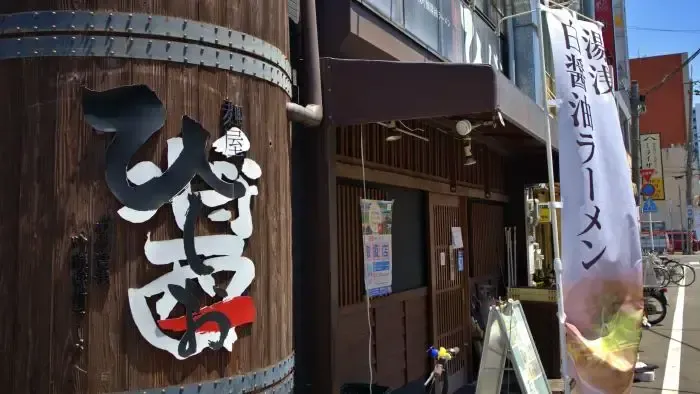 Menya Hishio: Yuasa Soy Sauce Ramen, and Gyoza Where the Dip Is the Star
Wakayama is tonkotsu-shoyu country, and its ramen is usually filed under the Ide school or the Shakomae school. Menya Hishio belongs to neither. Its bowl is jet-black…
Menya Hishio: Yuasa Soy Sauce Ramen, and Gyoza Where the Dip Is the Star
Wakayama is tonkotsu-shoyu country, and its ramen is usually filed under the Ide school or the Shakomae school. Menya Hishio belongs to neither. Its bowl is jet-black…