Shukubo Fudoin: A Night Inside a Cultural Property on Koyasan
Overview
Koyasan has dozens of temples that take overnight guests, but few let you eat inside the designated building itself. Fudoin, founded some eleven centuries ago and long tied to the imperial house, is among the older establishments on the mountain. Its shoin hall dates from the Azuchi–Momoyama period, roughly 450 years ago, and is designated a tangible cultural property by Wakayama Prefecture: the coffered ceiling was built to read as a mandala, the universe without limit, and the pillars and beams are the originals.
That hall is now the dining room. Guests take shojin ryori there — the mountain's Buddhist vegetarian cooking, built on koya-dofu, seasonal simmered dishes and tempura — facing a dry-landscape garden (吉仙庭) laid out by Mirei Shigemori, the modernist behind the gardens at Tofukuji in Kyoto. The garden is lit at dusk. Hanging scrolls and painted sliding doors fill the rooms, and a library of Buddhist texts, Koyasan volumes and DVDs recovered from the storehouse is left open to guests as a quiet room, guidebooks included.
What surrounds the sleep is the point of a shukubo: morning prayers, sutra copying and ajikan, the Shingon meditation on the syllable A. Fudoin stands in the temple town at Koyasan 456, reached by the Nankai line to Gokurakubashi and the cable car above it. Check-in runs from 15:00 to 17:00 and check-out is at 10:00, but rates, meal plans and the schedule of practices are best confirmed on the temple's own site before booking.
What the article covers
- Fudoin's Shoin Hall
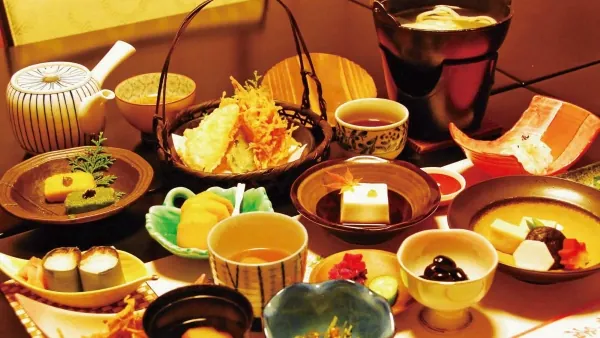 【高野山】泊まれる文化財「宿坊 不動院」で歴史と癒やしの旅を
Read the full article
Rokaru Wakayama
【高野山】泊まれる文化財「宿坊 不動院」で歴史と癒やしの旅を
Read the full article
Rokaru Wakayama
The original is in Japanese — modern browsers can translate it for you automatically.
More from this area
-
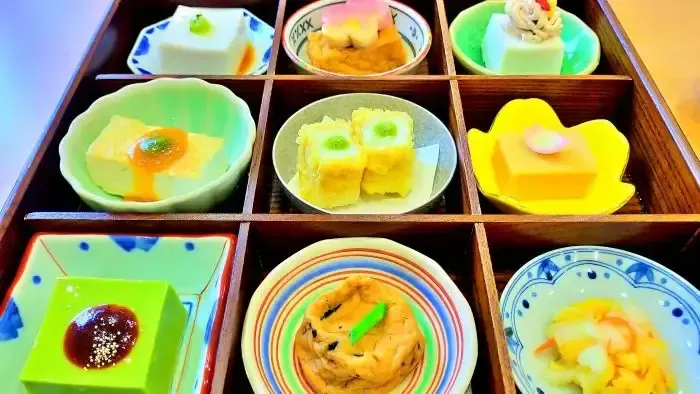 Kadohama Goma-Tofu Sohonpo: Sesame Tofu Kaiseki on Koyasan
Goma-dofu, the sesame “tofu” of Japanese temple cooking, contains no soya at all: sesame paste is set with kudzu starch into a dense, faintly elastic block. On Koyasan…
Kadohama Goma-Tofu Sohonpo: Sesame Tofu Kaiseki on Koyasan
Goma-dofu, the sesame “tofu” of Japanese temple cooking, contains no soya at all: sesame paste is set with kudzu starch into a dense, faintly elastic block. On Koyasan…
-
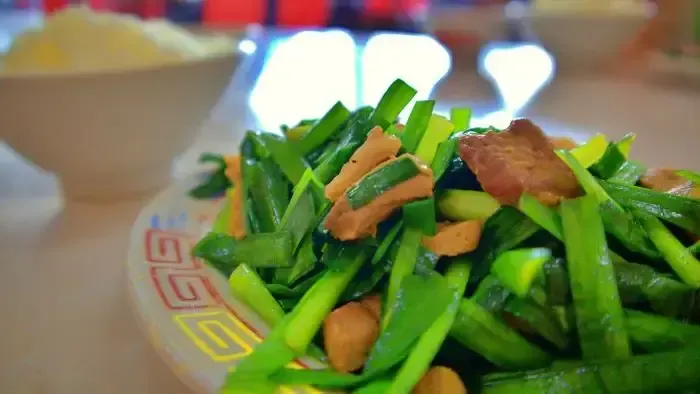 Nikenme Hanten: Katsuragi's Signature Garlic-Chive Stir-Fry Lunch
Nikenme Hanten (二軒目飯店) is a machi-chuka — a neighbourhood Chinese diner — that has fed Katsuragi since 1965, from a roadside plot on Route 24, in the same town as the…
Nikenme Hanten: Katsuragi's Signature Garlic-Chive Stir-Fry Lunch
Nikenme Hanten (二軒目飯店) is a machi-chuka — a neighbourhood Chinese diner — that has fed Katsuragi since 1965, from a roadside plot on Route 24, in the same town as the…
-
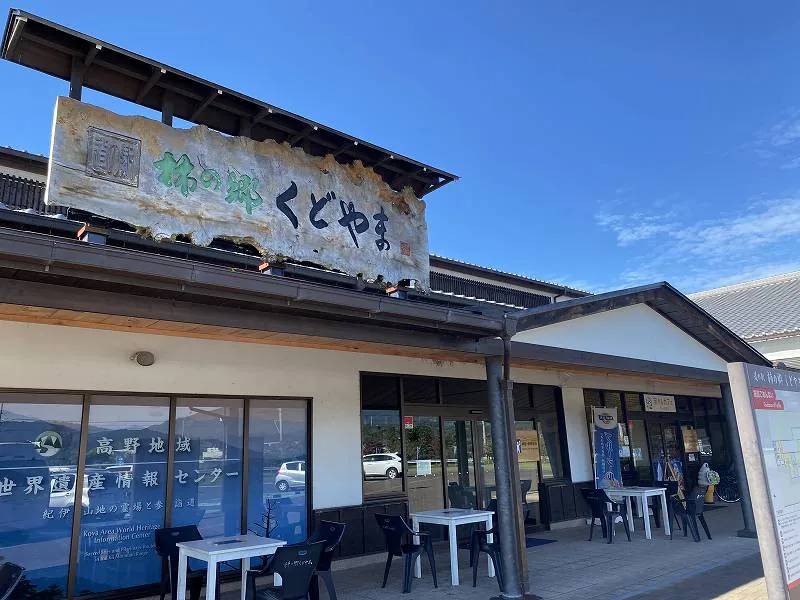 Michi-no-Eki Kaki-no-Sato Kudoyama (Roadside Station)
Michi-no-Eki Kaki-no-Sato Kudoyama is a roadside station in Kudoyama, a small town in the hills of north-east Wakayama that has long served as a gateway to the sacred…
Michi-no-Eki Kaki-no-Sato Kudoyama (Roadside Station)
Michi-no-Eki Kaki-no-Sato Kudoyama is a roadside station in Kudoyama, a small town in the hills of north-east Wakayama that has long served as a gateway to the sacred…